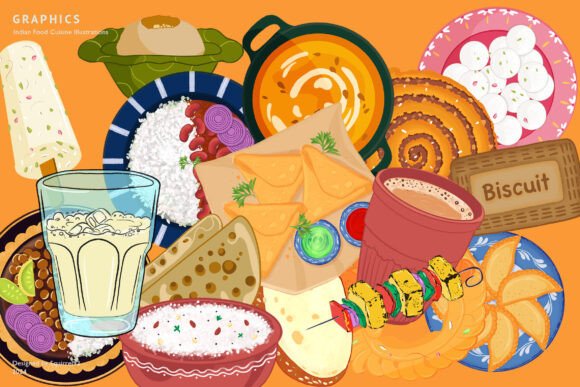
Indian Food Illustrations: A Feast for Your Creative Senses
There’s a certain magic in the way a single image can transport you. For designers and creators, a powerful visual asset doesn’t just decorate a project; it tells a story, evokes an emotion, and builds an immediate connection. This is precisely the experience offered by this stunning collection of Indian Food Illustrations. It’s more than a set of images; it’s a curated gallery of culinary art, designed to infuse your work with the warmth, vibrancy, and rich diversity of Indian cuisine. Each illustration is a standalone piece, ready to become the centerpiece of your next creative endeavor.
Forget generic stock photos. These are meticulously crafted digital artworks that capture the soul of beloved dishes. The collection presents 17 distinct illustrations, each rendered as a high-quality PNG file, ensuring seamless integration into any design software. From the deep, earthy tones of a hearty rajma-rice bowl to the explosive golden curls of a crispy jalebi, the visual personality is both authentic and captivating. You’ll find the comforting steam rising from a traditional kulhad chai, the intricate layers of a flaky paratha, and the jewel-like translucence of a badam-petha. This assortment is a true ode to Indian culinary diversity, offering a visual language that speaks of celebration, comfort, and tradition.
The Anatomy of a Versatile Design Asset
What makes these Indian Food Illustrations so effective for creative projects? It comes down to their style and practical application. The visual approach strikes a perfect balance between realism and artistic flair. The illustrations are detailed enough to be recognizable and appetizing, yet stylized enough to work harmoniously within a broader design system. This isn’t flat, lifeless clip art. These are rich, textured compositions that use color and form to convey taste and aroma.
Consider the practical side. As individual PNG files, they offer incredible flexibility. You can isolate a single samosa to accent a menu design, or arrange a vibrant spread of chole-rice and gol-gappe for a social media banner. The transparent backgrounds mean you’re not fighting with awkward white boxes, allowing the illustrations to blend naturally into any color scheme or layout. This asset is built for real-world use, saving you countless hours of sourcing or commissioning custom artwork.
Where These Illustrations Truly Shine
The applications for a collection like this are vast, limited only by your imagination. For a food blogger or publisher, these illustrations can transform recipe cards, break up long-form articles, and create eye-catching featured images that stand out in a crowded feed. A restaurant owner or food entrepreneur can use them to design a unique menu, create appealing packaging for takeaway containers, or develop social media content that feels cohesive and professionally branded.
For graphic designers and brand strategists, the collection serves as a foundational element for building a brand identity. Imagine a catering company using the sool paneer tikka illustration as a central motif in its logo design or website hero image. The illustrations can influence brand perception, instantly communicating a message of authenticity, flavor, and quality. They help establish a consistent visual language across all touchpoints, from business cards to digital advertisements, fostering immediate recognition and audience engagement.
Integrating Culinary Art into Your Creative Workflow
Adopting a new set of design assets should feel like an enhancement, not a complication. Here’s how to think about integrating these Indian Food Illustrations effectively. First, evaluate your project’s tone. The warmth and richness of these images pair exceptionally well with earthy color palettes, textured paper backgrounds, and complementary typefaces. Consider pairing them with a clean sans serif font for a modern feel, or a classic serif font to underscore a sense of tradition and heritage.
Think about visual hierarchy. A large, detailed illustration of a gujiya can serve as a powerful focal point for a festive campaign, while smaller icons of a biscuit or multi-grain bread can be used as subtle accents in a website footer or email signature. The key is to let the food tell its story without overwhelming your core message. These assets are designed to support and elevate your content, not replace it.
A Practical Guide to Choosing and Using the Collection
Before you dive in, a moment of thoughtful consideration will ensure the best results. Ask yourself: Does the visual style of the illustrations align with my project’s aesthetic? The vibrant, celebratory nature of these images makes them ideal for projects related to festivals, family gatherings, and hearty meals. They might be less suited for a minimalist, starkly modern design, but could add a wonderful point of contrast in such a context.
Next, consider your font pairing. The personality of the food illustrations will influence your typographic choices. A playful, handwritten-style script font might complement the whimsical shape of a badam pista kulfi, while a bold, structured display font could stand up to the visual weight of a pumpkin soup illustration. Test different combinations to see what creates the right mood. Always prioritize readability; the most beautiful pairing fails if your audience struggles to read the accompanying text.
Finally, review the licensing terms. As a commercial font and asset package, understanding the permitted uses is crucial for professional work. Ensure the license covers your intended application, whether for a client project, merchandise, or digital products. This step protects your work and ensures you are using the asset ethically and legally. This collection of Indian Food Illustrations isn’t just a download; it’s a tool for storytelling, ready to help you create designs that are not only seen but deeply felt.